Prof Rick Tarnas – The Many-Layered Mystery of the Human Journey
For each of us to navigate our way in life during this dramatic, challenging age of human history and Earth evolution requires sources of insight that go beyond simple strategies for just getting ahead or coping with life. Can we find a place of equilibrium, an eye in the storm, from which we can engage our time of intense polarization and radical change? What is the role of hope in such an era?
The depth psychologists C. G. Jung and Stanislav Grof as well as certain philosophers like Hegel and Charles Taylor have helped restore to the secular modern mind the recognition that the unfolding of human life is at a deep level a spiritual and moral journey. Equally important, they recognized that our individual unfolding is embedded within larger, ever-evolving historical developments that shape our personal journeys, and that reflect a kind of collective spiritual and moral evolution. Tonight’s lecture will try to glimpse a larger context and frame of reference to help us access those deeper moral and spiritual sources through which we can better engage our perilous time and perhaps find new resilience in our lives.
RICHARD TARNAS is a professor of philosophy and cultural history at the California Institute of Integral Studies in San Francisco, where he founded the graduate program in Philosophy, Cosmology, and Consciousness. He teaches courses in the history of ideas, archetypal cosmology, depth psychology, and religious evolution. He has frequently lectured on archetypal studies and depth psychology at Pacifica Graduate Institute in Santa Barbara, and was formerly the director of programs and education at Esalen Institute in Big Sur. He is the author of The Passion of the Western Mind, a history of the Western world view from the ancient Greek to the postmodern that is widely used in universities. His second book, Cosmos and Psyche, received the Book of the Year Prize from the Scientific and Medical Network, and is the basis for the ten-part documentary series The Changing of the Gods. He is also the co-editor of Psyche Unbound: Essays in Honor of Stanislav Grof. Richard Tarnas is a past president of the International Transpersonal Association and served for many years on the Board of Governors for the C. G. Jung Institute of San Francisco.
Date
- Mon, 24 October 2022
- Event has passed
Time
- 7:30 pm - 9:30 pm
Local Time
- Timezone: America/New_York
- Date: Mon, 24 October 2022
- Time: 2:30 pm - 4:30 pm
Labels
- Consciousness Perspectives Forum
Location
Category

Speaker
-
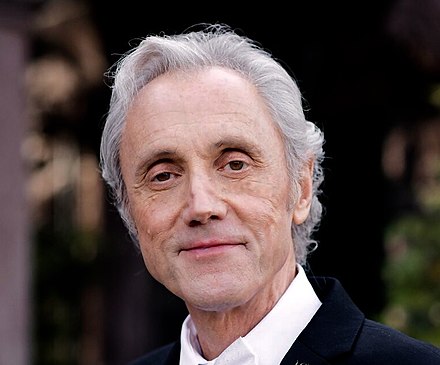 Richard Tarnas
Richard Tarnas is a professor of philosophy and cultural history at the California Institute of Integral Studies in San Francisco, where he founded the graduate program in Philosophy, Cosmology, and Consciousness. He teaches courses in the history of ideas, archetypal cosmology, depth psychology, and religious evolution

Recent Book Reviews




Random Book Review