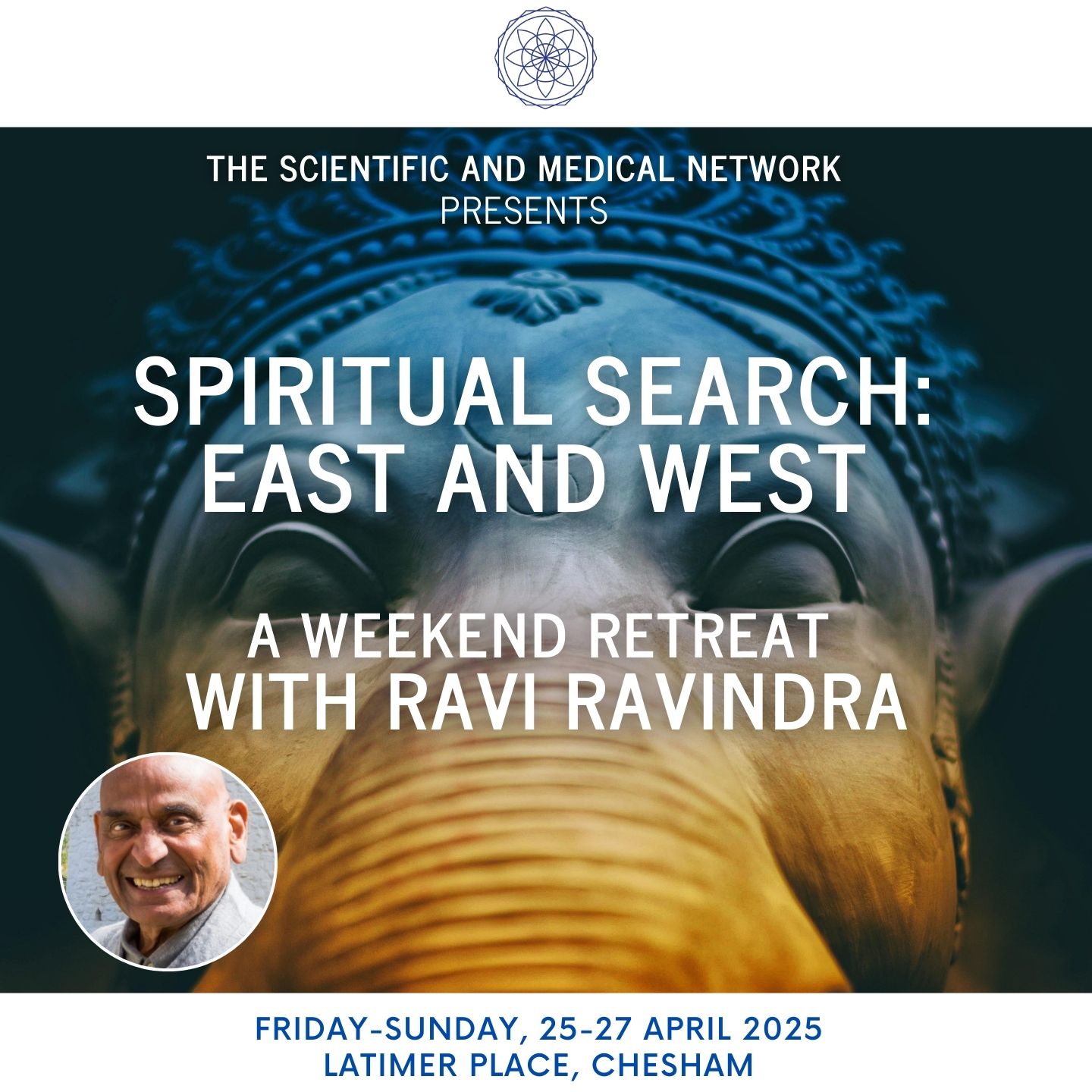
Spiritual Search: East and West
A weekend retreat with
Ravi Ravindra
Latimer Place, Chesham, April 25-27
Spiritual search is oriented towards finding why the cosmic forces have bothered to create me and what is the purpose of my life. This urge is embedded in every person’s soul. But the prevalent educational systems everywhere encourage our energies to be directed for one’s personal gain, honour and pleasure. Owing to commitment to a specific religious perspective even the general religious and philosophical professions often interfere with serious search. At this retreat, we will explore how the different religious perspectives can assist our search and how they interfere.
In our contemporary planetary culture geographical boundaries have become less important, largely owing to the freedom made possible by enhanced technology of travel and communication. But religious attitudes still foster regional and traditional boundaries. If we can explore with sympathy and compassion the perspectives of religious traditions other than our own, it is possible to go beyond any particular expression as all the great sages have insisted that Truth or God is beyond expression. It is important for a searcher to understand that an expression of Truth is not the Truth. At best an expression can point to the Truth.
In this retreat, we will explore the basic attitudes and tendencies in the religions dominant in the East and the ones prevalent in the West. East in this context largely refers to the regions influenced by Hinduism, Buddhism, Jainism and Sikhism; and the West refers to the regions influenced by Judaism, Christianity and Islam.
There are many common features of spiritual search in East and West, especially in the mystical experiences of the sages everywhere, but there are some radical differences which have influenced all aspects of the cultures—philosophy, theology, music, arts, poetry.
Most of the cultural differences between the East and the West result from the basic idea whether God created the world and no creature can be like the creator, or whether Brahman emanated the world from Its own substance while at the same time being able to be beyond the manifested universe. Strictly speaking, the Indian traditions do not have a myth of creation. What they have is a myth of emanation. Everything and every being in the manifested universe, even the lowest creatures and material particles, has an aspect of Brahman in them. Therefore, the resounding call from all the sages in the Eastern traditions is to discover and to unite with one’s Brahman nature. This will be considered a blasphemy in the Abrahamic tradition and anybody who claimed to be one with God, for example Jesus Christ or Al Hallaj, was crucified.
Emphasis in the Indian traditions is on oneness (non-duality) of everything, whereas in the Abrahamic tradition the emphasis is on the uniqueness of everything. Even the great prophets, even after death, remain unique and different from God. In the Abrahamic traditions it is very difficult to find an expression such as the spirit of a sage merged into the cosmic Spirit or Brahman.
How do we reconcile these perspectives as in our planetary culture it is not wise to think that half the sages got the matter wrong? It is important to understand that expression of Truth is not the Truth. At best any expression or tradition is a finger pointing to the Moon. If one gets tightly stuck to the finger, one can never get to the Moon. To view the full schedule please scroll down.

Ravi Ravindra obtained MTech from Indian Institute Technology, Kharagpur; MSc and PhD in Physics from the University of Toronto, and MA in Philosophy at Dalhousie University. At different times he has held post-doctoral fellowships in Physics (University of Toronto), History and Philosophy of Science (Princeton University) and in Religion (Columbia University). He is now Professor Emeritus at Dalhousie University in Halifax (Canada) where he had taught courses in the departments of Physics, Philosophy and Comparative Religion.
Ravi is a Member of the Institute of Advanced Study in Princeton, a fellow of the Indian Institute of Advanced Study in Shimla, and the Founding Director of the Threshold Award for Integrative Knowledge. He is an Honorary Member of the Scientific and Medical Network, of the European Yoga Union, and a Fellow of the Temenos Academy, England. He was a judge for the Templeton Prize for Progress in Religion for three years.
Ravi‘s spiritual search has led him to the teachings of Gurdjieff, Krishnamurti, Zen, Yoga, and a deep immersion in the mystical teachings of the Indian and Christian classical traditions. He has authored many articles and books in a variety of fields. www.ravindra.ca
BUY MY RETREAT TICKET
Accommodation and Venue Amenities
Accommodation is in en suite single or double occupancy rooms.
Your ticket will include all meals and coffee/tea breaks.
Your will have access to the hotel amenities (gym, swimming pool).
There is free on-site parking.
Please note:
- If you are booking double occupancy please make sure you have 2 double occupancy tickets in your basket.
- In the event of cancellation, a fee of £30 will be retained, and no refunds can be given after 10 April 2025.
Food and Drink
Please note: Meals will be vegan and vegetarian, and we will not consume alcohol at the retreat.
Schedule for the Weekend
Friday, 25 April
5:00 pm Arrivals
6:00-6:40 pm Gathering Welcome and Reception
6:45 pm Supper
8:00-9:30 pm Introductions to each other and to the weekend. Quotes and poems brought by participants I
Saturday, 26 April
7:00 am Simple Physical Yoga Postures
7:45 am Meditation
8:30 am Breakfast
9:30 am Ravi: ‘Similarities in the Abrahamic and Indian Traditions’
11:00 am Coffee
11:30 am Small Group Breakouts on Selected Quotes
12:15 pm Exchange Together
1:00 pm Lunch
2:30 pm Ravi: ‘Radical Differences in the Eastern and Western Spiritual Traditions’
3:30 pm Quotes and poems brought by the participants II
4:15 pm Tea
4:45 pm Some simple exercises
5:15 pm Meditation
5:45 pm Free time
6:45 pm Supper
8:15-9:15 pm Film
Sunday, 27 April
7:00 am Simple Physical Yoga Postures
7:45 am Meditation
8:30 am Breakfast
9:30 am Ravi: ‘Self-knowledge and Self-transformation’
10:30 am Quotes and poems brought by the participants III
11:15 am Coffee
11:45 am Small Group Breakouts on Selected Quotes
12:30 pm Exchange Together
1:00 pm Lunch
2:15 pm Concluding session: Ravi: ’Spiritual Searcher in a Global Culture’
3:30 pm Tea and Departures
BUY MY RETREAT TICKET
Speaker
-
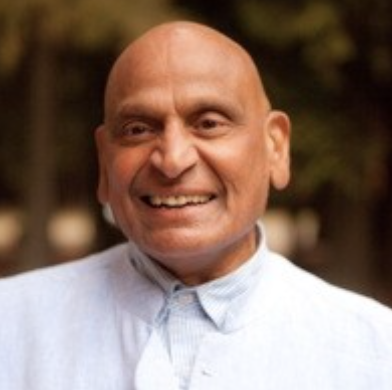 Ravi RavindraTeacher and Author
Professor Ravi Ravindra is a native of India, he emigrated to Canada and is Professor Emeritus at Dalhousie University, in Halifax, Nova Scotia, where he served for many years as a professor in three Departments: Comparative Religion, Philosophy, and Physics. He was a Member of the Institute of Advanced Study in Princeton, a Fellow of the Indian Institute of Advanced Study in Simla, and Founding Director of the Threshold Award for Integrative Knowledge. He has been a member of the Board of Judges for the prestigious Templeton Prize for Progress in Religion. He is an honorary member of the Scientific and Medical Network. Ravindra’s spiritual search has led him to the teachings of J. Krishnamurti, G. Gurdjieff, Yoga, Zen, and a deep immersion in the mystical teachings of the Indian and Christian traditions. He is the author of many books on religion, science, and spiritual disciplines, including:
‘The Gospel of John in the Light of Indian Mysticism (American edition of The Yoga of the Christ)’
‘Krishnamurti: Two Birds on One Tree Science and the Sacred’
‘Pilgrim Without Boundaries’
‘The Spiritual Roots of Yoga’
‘The Wisdom of Patañjali’s Yoga Sutras’
‘The Pilgrim Soul: Path to the Sacred Transcending World Religions’
‘Heart Without Measure: Gurdjieff Work with Madame de Salzmann’
‘The Bhagavad Gita: Guide to Navigating the Battle of Life’
Ravi is the Series Editor of an eight-volume series dealing with The Inner Journey in the major spiritual traditions of the world.

Recent Book Reviews





Random Book Review